Friday, November 20, 2009

The Deadly Venoms of Web Site Design


For those outside the I.T./Development/Design industry, things are new and unfamiliar and there are some deadly killer mistakes that can be encountered that can render your project useless, stopping you cold in your tracks. Here I will offer you the antidote for what has stalled your project.

Conceptualization and planning
The first deadly venom is failing to understand the purpose and planning for your website. Be clear to understand what your end users want, based upon your end users (clients) needs. Do not base your decisions on what you do or don't want (especially if you've given creative license to your designer) rather, do enough research to develop a rough idea of what you will need to serve your business. This planning phase is skipped more often than the other two stages. Most writers don’t enjoy creating outlines for research papers, and most web designers don’t like creating flowcharts either. Don’t be lazy in this phase, insist on proper planning. If you put forth the effort and plan out your website, then you will find the web design process to go smoothly with fewer mistakes made along the way. There are a few things that you will need in order to effectively conceptualize and plan your website:

  • a general idea of the different sections of your website
  • a pen and paper
  • conceptualization 
  • flowchart

Understand what you are buying and paying for
Once you pay a 50% deposit, it is virtually impossible to get it back without going to legal avenues. If your website developer is in a different country, you may not have much hope to recover your money, if things go wrong, even if you use PayPal.
No attention has been given to title tags, key words, page descriptions and content, meaning the site does not appear for search terms that it should rank well for. Make your titles on your web page make sense: One of the core attributes of a web page is its title. In between the tags you can specify the page's title as it appears in the browsers top title bar and in the search engine results.

The website is not XHTML compliant by W3C standards. 
This means it does not render or work properly in all browsers and operating systems. Issues include improper tag nesting, depricated tags, unclosed tags, spaghetti code, tables and frames. This also hinders seach engine ranking, usability and Web 2.5 compliance.

The website hosting company is unreliable. 
The web site is hosted on inferior computer equipment and the connection to the Internet is slow. This is another way of cost cutting, and the customer is left with a web site that just doesn't perform like it should or is down for long periods of time. If your using a host that does not support the features your website needs ie: Joomla, SSH, Unix, Google Adwords, Cold Fusion, Java, ASP etc. Although connection to the internet cannot be 100% guaranteed, website uptimes vary considerably among hosting providers.
Is the web site compatible to browsers other than Microsoft Internet Explorer. This means that people who use a different browser to access your web site will not be able to read your web site or navigate through it.

Another pitfall is the emphasis on having flash animation 
to make your web site stand out. Unless you can afford to change the flash animation on your web site every day, not many of your customers will want to see it again, and some may not even want to see it the first time. Flash animation must be used appropriately. It must convey meaning and be there for a reason. Otherwise it looks tacky and cheap and there are better ways of spending your money. Search engine optimisation for flash websites is more difficult, especially if the site has a flash intro on the index or home page.

Many people believe that they are purchasing a website 
and will own the copyright to that site and can move it where ever they please. Generally, this is not the case as the code belongs to the developer and the user is paying for a licence to use rather than property rights. Likewise, people also believe a logo comes with their website design, or that registering a domain name gives them online incorporation. A clear understanding needs to be sought and agreed to (preferably in writing), so both parties understand their respective rights and obligations. Unless otherwise specified, Passion Computing customers receive full non exclusive license to use and modify their website.

Another pitfall is that 
website developers do not consider the implications 
of the website they design. Example. A website that is intended for a community portal will not only require more data traffic and web space, but will ideally need to be hosted on MS SQL and not Access database. The client wants it cheap, so they host it on Access, only to find that when there are too many visitors the system slows down and becomes unusable.
The client is not computer literate and they need to be informed of what is and is not plausible and reassess their budget or design based on information supplied by an expert. The client is not the developer and because price is important, shortcuts are taken at the expense of functionality. It is important to find a good developer that will listen to what you require but will also advise on the best way to design and implement that solution and tell you realistically if the amount of work involved is more than what you have budgeted for. Too often, the developer simply implements the client's ideas without highlighting the limitations and problems associated with that solution.

Passion Computing 
simply will not implement unsustainable software solutions and we consider the project in a holistic context of computer hardware, software, and risk management.
Customers do not consider security. Implementing free code on the interent or open source code though cost effective have potential danger, in that the code may be full of spyware, have back door logins that allow information to be stolen and customer information to be compromised.

Guerrilla Marketing

Over the past month, I've explored the ins and outs of the weird world of guerrilla marketing. What was once a fringe movement in the world of advertising has become much more popular and mainstream since the late 1970s, when marketing expert Jay Conrad Levinson and artists like Milton Glaser introduced these concepts to the world at large. But what is guerrilla marketing, exactly? If you’re still scratching your head about what this guerrilla stuff is all about, step onto the tour bus as we take one more look around. Keep hands and feet inside the vehicle at all times, please. We’ll review the highlights at each of our stops. Feel free to hop off and visit any of the sections that interest you, then hop back on to navigate the rest.


1) The History of Guerrilla Marketing

In part one of our gmarketing series, we took a look at how advertising went from boring, educational, and sometimes downright false ads to the entertaining spectacle we know and love today. Jay Conrad Levinson, author of many books on the subject, is credited as the father of Guerrilla Marketing. His ideas paved the way for small businesses to compete in the marketing arena with the big companies, ushering in an era of innovative sometimes extreme marketing ideas. But Levinson’s ideas aren’t just about getting the customer’s attention: companies have to be ready and willing to back up their advertising with excellent products and services.

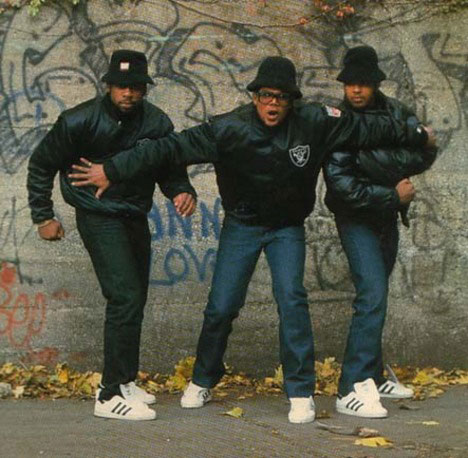
 run dmc guerrilla marketing adidas

2) The Origins and Evolution of Guerrilla MarketingHave you ever wondered how guerrilla marketing got so popular? J.C. Levinson’s book was only part of the equation. The main reason guerrilla marketing took off was its incredible effectiveness at breaking through our advertising blinders. The first instances of guerrilla marketing were radical for their time, but the techniques continued to develop. Girls convincing men to buy them drinks was suddenly more about marketing than about flirting. Even rappers got into the game when Run DMC released a song called My Adidas, sending sales of Adidas through the proverbial roof.

Usain Bolt's historic Olympic victories have provided his shoe sponsor, Puma

AG, with an unexpected burst of publicity on the global stage. His hand gesture Gesture alone after the recrds were broken generated over 10 million dollars and all his shoues were sold out. And yet the German footwear company's immediate reaction -- as laid back as a sunny Jamaican morning -- is almost the opposite of Mr. Bolt's now-famous celebratory celebration. This is one of may situations where geurill marketing goes wrong. The beast becomes too big to manage. Dana Flavelle of the Toronto Star reported that "

Ikea Canada has quietly pulled a "guerrilla" marketing campaign aimed at promoting its fall catalogue and driving sales to its stores, citing complaints from some businesses.

The issue came to light again yesterday after Toronto city councillor Howard Moscoe, chair of licensing and standards, called Ikea's spray-painting campaign "vandalism" and ordered the retailer to "cease and desist.","Ikea took a "calculated risk" when it decided to use the guerrilla marketing tactic as part of a wider TV and internet campaign, said spokesperson Madeleine Lowenborg-Frick.

Ikea likes to be seen as youthful, fun and edgy but never at other people's expense, she said. She blamed miscommunication between it and the firm it hired to execute the guerrilla marketing campaign."

In the meantime, the controversy received national media attention, which some might consider a sign of success.

Zig, the Toronto firm Ikea hired to design its fall campaign, has made headlines in the past; A previous campaign for the Breast Cancer Society featured a cute young guy named "Cam" offering to help women with their breast exams. Using humour instead of fear didn't sit well with some. But it earned the client all kinds of free publicity. "The effective spot was even the subject of numerous lead stories on the evening news," Zig says on its website.

And the $15,000 Ikea contest? It had 1,000 entries within five days, Guerilla Marketing gone wrong. Maple Leaf Sports Entertainment hopes you’ve noticed the messages and logos it hired an ad company to spray on sidewalks. The city definitely took notice and gave MLSE 48 hours to remove the markings, according to a published report.


The ads that read “Leafs Nation, Spirit Is Everything” started appearing on sidewalks in October. This week officials at City Hall contacted MLSE to inform the company it had two days to remove the markings, or else the city would do it and send them the bill, the Toronto Sun report states.

 Mike Gillissie, vice-president of Grassroots Advertising says "I don't understand why it's become such a big issue,'' the agency that subcontracted the job from MLSE's ad purchasing firm. "We thought it was a cool thing to do but now the city says we can't. So they're coming down.''

 MLSE said Grassroots Advertising claimed it secured the right to spray sidewalks with paint. They lied, and tried to do the thing small innovators do. MLSE is to blame, for hiring a Wack agency to develop their campaign. Was the purpose for Grassroots to make a buck or gain fame piggy backing on real street artists and smaller innovating compamies. They're just biting other peoples style and cashing in to make a buck, after all, what was the purpose? I could sell these leafs in Ottawa with nothing more than a pencil. The bottom line is to innovate, captivate and motivate the MIND!, not to copy, that's weak wack!

I think this ad campaign was dreamed up precisely because it’s “unconventional” - it’s an attempt to give the Leafs “street cred” and make them feel cool, like the urban fabric of the city. There is probably the hope that less critical minds will think that this is spontaneous fan art, and that it will nestle into their hearts all warm and fuzzy.

So you’re allowed to deface public property and insert your marketing message into our collective space if you’re a corporation with oodles of money, but if you’re an artist trying to get people to think, you’re a criminal? Typical.


 3) Major Corporations Go For Guerrilla Marketing

Although J.C. Levinson’s ideas were geared toward the small business evening the playing field against bigger rivals, major corporations soon began using guerrilla tactics to sell their products. Their efforts aren’t always rewarded, especially when existing customers feel like the big businesses are overstepping their bounds or being deceitful.


4) Guerrilla Marketing Versus Viral Marketing

Advertising executives are under a lot of pressure to make their campaigns successful. At some point, it occurred to some ad people that they could make ads so irresistible that they would actually be passed around willingly by customers. The result: self-propagating advertising. Guerrilla marketing sometimes takes the form of a viral campaign. The viral campaign happens organically and spontaneously; if it’s pushed too hard by its creators there’s a pretty good chance it’ll never get off the ground. Some of the most successful guerrilla marketing campaigns have taken the form of viral videos or websites.


5) Guerrilla Marketing for Social Causes

So far, our guerrilla marketing tour has focused on businesses and making money. Nonprofit organizations need to spread their word, too, and today many of them are turning to guerrilla marketing tactics to reach their target audience. The Red Cross has created some of the most ingenious and eye-catching socially aware guerrilla marketing messages.


6) 10 Different Types of Guerrilla Marketing

Did you know that guerrilla marketing isn’t just about putting up some posters or creating a rad short video? It can take on nearly any form. From strangers chatting with people on the street to making a product really hard to get hold of, marketers have lots of sneaky, amusing, and intelligent ways to get you to want what they’re selling.


McD's Lightpost Free Coffee Campaign is a winner.

7) Is Guerrilla Marketing Right for You?

You don’t have to be a business (big OR small) or a socially conscious nonprofit organization to reap the rewards of guerrilla marketing. You can use unconventional techniques to land a job, get a date, or promote your talents. Of course, if you’re a small business owner you should know that guerrilla marketing isn’t all about the flashy message. It’s essential to back up the advertisements and never disappoint your customers. As quickly as guerrilla marketing messages can spread, negative feedback spreads even faster.


8) The Future of Guerrilla Marketing

We can’t see exactly what is in the future for guerrilla marketing, its devotees, and the public who alternately loves and hates the constant advertising. But as we become more commercially oriented, it seems that advertisements are popping up nearly everywhere. Will we soon see ads on any and all available surfaces? Will the forehead tattoo ad become mainstream? Perhaps, but one thing that’s sure is that future advertisements will be even more difficult to tell apart from real life.

We’ve reached the end of our guerrilla marketing tour. We’ve seen some amazing sights and gained some valuable knowledge about the world of advertising. You’ll probably find yourself looking differently at ads now that you know the secrets that marketers use to grab your attention. We hope you’ve enjoyed your tour

, and you’re invited back to re-visit all of your favorite stops at any time. Please watch your step as you exit the bus

Tuesday, November 10, 2009

The Blastmaster with Digexart


Demuth Flake and Chris Parker AKA KRS One in the BMG offices

Have you ever wondered what happened to the enlightened informed individuals who innovate and have refrained from becoming Wack Recording Industry concoctions.

Throughout the 90's and early 2000's I was heavily involved with the Hip Hop Culture. In fact, My first record was Public Enemy "98" b/w "My Uzi Weighs a Ton" I purchased this record from Recods on Wheels in 1984. I subsequently started breakdancing, DJing and writing graffiti. I became known for all disciplines as a BBoy. I needed to fully Suss out what was out there to take advantage of. The music was often inspiring and in the same way James Brown was ahead of his time, many of the artists I listened to were also way ahead of their time. Grandmaster Flash, Melle Mel, Africa Bambatta, Kool Herc, Red Alert, The Cold Crush Brothers, Slick Rick, Run DMC, Beastie Boys, Public Enemy and many others were at the forefront and the innovation of the craft happened like magic right before my eyes. You must have remembered when Micheal Jackson did the Moonwalk right? Well it was well known that BBoys in the Bronx were regularly creating new dances including the Moonwalk , also poppin' Lockin' breakin' and the B-Boy was the creator of all this culture. I knew where I fit into this program.


Is hip-hop dead? It sure sounds like it if you turn on the radio. What used to be exciting, groundbreaking music seems to have been reduced to a one-note din, Autotune Ring tone Rap. The only topics discussed are bling-bling materialism, how many guns you have, and "ho's." Hip-hop poster boy 50 Cent appears on the cover of Rolling Stone with the caption "Mastering The Art of Violence." There's the raunchy Lil' Kim, and of course, top dog and now Oscar-winner Eminem, who has threatened to kill his wife numerous times on his records.

When you start to think about our Hip Hop music through the years, and how it has been infiltrated by purveyors of ignorance and arrogance. Are you suprised to find that Kanye West is a Moronic Idiot?

Diana Ross and Li'l Kim at the VMA's 1999. Mary J. Blige and Kim presented an award with Ross, Ross opted to greet Kim not by shaking her hand but by jiggling her breast.

Back in hip-hop's heyday of the '80s and early '90s, some of the most popular groups were also some of the most vibrant - the militant Public Enemy, the uplifting Arrested Development, the stylistically abstract A Tribe Called Quest, and the teacher KRS-One. Despite different approaches, they seemed to be working together to speak about the black experience and create the melting pot that made hip-hop so refreshing and vital.


"In the late '80s, there was such a diversity (in hip-hop)," says Kevin Powell, former Vibe magazine senior writer and editor of "Who Shot Ya? Three Decades of Hip-Hop Photography." "If you were a young black male growing up then, you could aspire to be Chuck D, or Big Daddy Kane, or Too Short, or Doug E. Fresh. You had choices. That doesn't exist anymore."

It's certainly harder to find. And offering it may take courage. When everyone else is talking about violence and riches, it's tough to talk about more cerebral issues without being laughed at by your peers and being called soft. "It is more difficult to try and make the masses buy it," says Common, one of hip-hop's most positive thinkers. He and Talib Kweli, performing at Roseland tomorrow evening, headline one of the most socially conscious hip-hop tours of the year.

One of the pioneers of politically conscious rap, Public Enemy co-creator Bill Stephney, feels that the music has gone so far from its roots that it is almost a parody at this point. "There is an over-representation of the criminal aspects of black youth culture (in music) from the videos and the records," he says. "Not all black kids out here are slinging cocaine, crack and heroin, and shooting at one another. What about the black kid who works at Haagen-Dazs in Brooklyn? He or she is not represented. What about the black kid who just goes to church with his grandmother on Sunday? I don't hear their story in any of these records! All I hear is bang, bang, shoot 'em up." Star, the outspoken host of Hot 97's morning show who never shies from calling hypocrisy when he sees it, calls this "die niggas, die slowly," and Stephney agrees.

So what happened? How did rap devolve from its glorious past to what even some founders suggest is its least innovative period? One of the reasons for the nihilistic themes that dominate today's rap music, Stephney believes, can be traced directly to the rise of the crack epidemic in urban communities.

"The heavy influence of the crack trade changed many of the values of the youth black culture since the mid-'80s," Stephney says. "That's where you get the materialism, the guns, the absolute die-hard mentality for meaningless things. So if you add all those things to the history of black people in general, then you get a very bad mix."

Under the surface, there is a non-commercial brand of rap that exists in the real Hip Hop culture. As KRS One states, "Rap is something you do, Hip Hop is something you live". In the Bible referring to the book of James, In verse 2:14, James speaks of a person having faith without deeds and asks, "Can such faith save him?" Can it?